Solar Power Plant Loan Assistance
We assist businesses, developers, and EPC companies in arranging solar power plant financing for captive, rooftop, and utility-scale solar projects. Our team helps structure bankable project finance proposals, prepare documentation, and connect with lenders for faster approvals.
Loan assistance for solar projects from ₹1 Crore to ₹100 Crore
Support for greenfield solar project finance
Guidance on promoter contribution and loan structuring
Assistance with bank documentation, DPR preparation and approvals
Talk to a Solar Project Finance Expert +91 7799612369
 msmeloans.in
Solar energy is rapidly becoming one of the most preferred sources of renewable power in India. Businesses, industrial units, and independent power producers are increasingly investing in solar power plants to reduce electricity costs and contribute to clean energy generation. However, setting up a solar power plant requires significant capital investment for equipment, installation, land, and grid connectivity.
To support such investments, banks and financial institutions offer solar power plant loans through structured project finance facilities. These loans help developers finance large solar projects while maintaining healthy cash flow during the construction and operational phases.
A typical solar project loan is structured based on project viability, expected power generation, and long-term revenue through power purchase agreements (PPAs). Understanding how solar project financing works can help businesses plan investments effectively and secure funding from banks or NBFCs.
Why Solar Power Plants Require Project Financing
Solar power plants involve high upfront costs even though operational expenses are relatively low once the plant becomes functional. Major cost components in a solar project include solar modules, inverters, mounting structures, land development, electrical infrastructure, and installation.
For example, the approximate cost of installing a solar power plant can vary depending on project size and technology.
- 1 MW Solar Power Plant: ₹3.5 – ₹5 Crore
- 5 MW Solar Power Plant: ₹18 – ₹22 Crore
- 10 MW Solar Power Plant: ₹35 – ₹45 Crore
Since these investments are substantial, most developers rely on project financing from banks. Solar power plant loans allow businesses to spread the investment over several years and repay the loan using revenue generated from electricity sales.
Primary Loan for Solar Power Plant
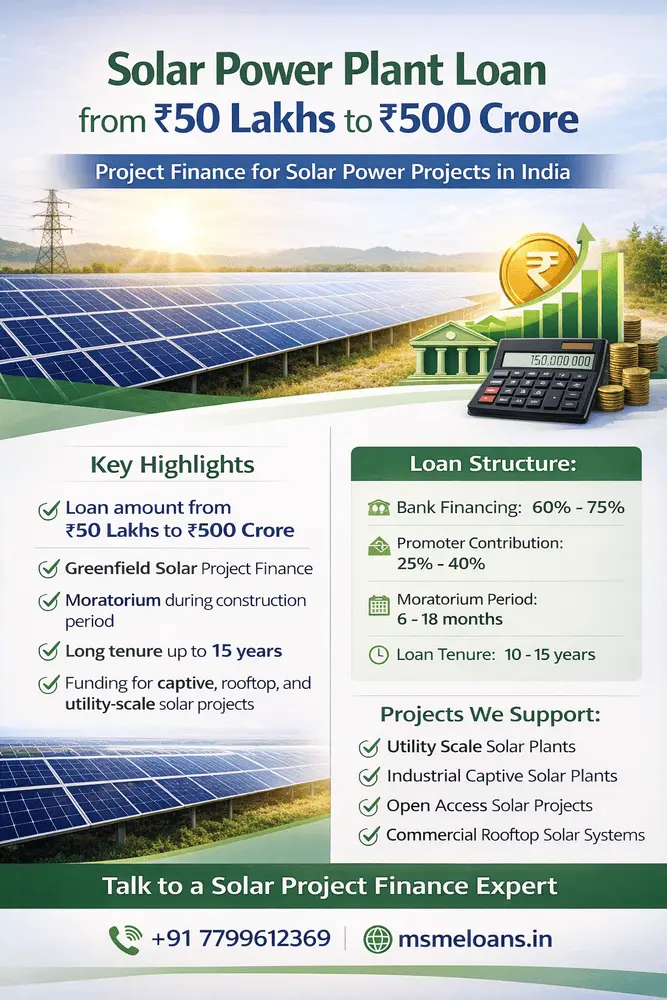
The primary financing source for solar power projects is a term loan structured under project finance. Banks usually finance a significant portion of the total project cost while the remaining amount is contributed by the promoter as equity.
A typical solar project loan structure looks like this:
- Bank Loan (Debt): 60% – 75% of project cost
- Promoter Contribution (Equity): 25% – 40%
- Loan Tenure: 8 – 15 years
- Interest Rate: 8.5% – 12% per annum (approx.)
The exact loan structure depends on the financial strength of the promoter, project feasibility, and the stability of the power purchase agreement associated with the project.
Moratorium Period in Solar Project Loans
One important feature of solar power plant loans is the moratorium period. This is the initial period during which the borrower is not required to start repaying the principal amount of the loan.
The moratorium period allows the developer to complete construction and begin generating electricity before starting full loan repayments.
Typical moratorium structures include:
- Construction period moratorium: 6 – 12 months
- Extended moratorium for large projects: up to 18 months
- Interest may still be payable during this period
This grace period helps solar developers stabilize operations before beginning regular loan repayments.
Solar Power Plant Loan Structure
Banks structure solar project loans carefully to ensure that the project generates sufficient revenue to repay the loan. The loan structure usually includes both debt and equity components along with security arrangements.
| Component | Typical Structure |
|---|---|
| Debt Financing | 60% – 75% of project cost |
| Promoter Contribution | 25% – 40% |
| Loan Tenure | 10 – 15 years |
| Moratorium Period | 6 – 18 months |
| Repayment Method | Quarterly or semi-annual installments |
The loan repayment schedule is usually aligned with the project’s expected cash flow from electricity generation.
Types of Solar Project Financing
Solar power plants require significant capital investment during the construction phase, but they also generate stable long-term revenue once the plant becomes operational. Because of this unique financial structure, banks and financial institutions offer different financing options tailored specifically for renewable energy projects. The choice of financing depends on factors such as project size, promoter experience, power purchase agreements, and expected cash flow from electricity generation.
Solar projects are generally financed using a combination of long-term loans, project finance structures, and operational working capital facilities. Each financing option serves a specific purpose in the lifecycle of a solar power project.
1. Term Loan
A term loan is the most common financing structure used for solar power plant projects. Under this model, banks provide long-term debt to cover a significant portion of the total project cost. Typically, lenders finance around 60% to 75% of the project cost, while the remaining amount is contributed by the promoter as equity.
Term loans for solar projects generally have repayment tenures ranging from 8 to 15 years. In most cases, lenders also provide a moratorium period during the construction phase of the project, which allows the developer to complete installation and begin generating electricity before starting principal repayment.
The repayment of the term loan is usually structured based on the expected cash flow generated from electricity sales. Solar developers repay the loan through regular installments funded by revenue received from power purchase agreements with utilities or commercial consumers.
2. Project Finance (Greenfield Solar Projects)
In project finance, lenders evaluate the financial viability of the solar project itself rather than relying entirely on the financial strength of the promoter. The loan approval is primarily based on the project’s expected cash flow, electricity generation capacity, and the long-term power purchase agreement (PPA).
Most large solar power plants are financed as greenfield projects. A greenfield project refers to a project developed from the ground up where new infrastructure is built on undeveloped land. In such cases, lenders finance the construction of the solar plant based on the future revenue expected from electricity sales.
Under greenfield project finance, banks carefully evaluate several factors before approving the loan:
- Project location and solar irradiation levels
- Detailed Project Report (DPR)
- Power Purchase Agreement (PPA) with utility or corporate buyer
- Project cost and promoter contribution
- Technology and EPC contractor experience
In most greenfield solar projects, banks finance around
60% to 75% of the project cost, while the remaining portion is contributed by the promoter as equity.
Loan repayment usually begins after the plant becomes operational and starts generating revenue.
To secure the loan, lenders typically take charge over project assets such as solar modules, inverters, project land (if owned), and escrow of electricity sale revenues. This structure ensures that the loan is repaid from the project’s cash flow over the life of the plant.
3. Working Capital Facility
Although solar power plants have relatively low operating costs compared to traditional power generation facilities, they still require working capital to manage day-to-day operational expenses. These expenses include plant maintenance, equipment servicing, insurance payments, spare parts procurement, and administrative costs.
Solar project operators may use a working capital loan for MSME to manage these operational requirements. Working capital facilities ensure that the plant can operate smoothly without interruptions due to short-term liquidity constraints.
Banks typically provide working capital through facilities such as cash credit limits or overdraft arrangements. These funds help maintain stable plant operations and ensure that the project continues generating consistent revenue throughout its lifecycle.
4. Green Energy or Renewable Project Loans
Many banks and financial institutions also offer specialized financing programs for renewable energy projects. These green energy loans are designed specifically to support investments in solar power, wind energy, and other sustainable energy technologies.
Renewable energy financing programs often offer favorable terms such as competitive interest rates, longer repayment tenures, and government-backed incentives. Institutions such as IREDA and several public sector banks actively support solar power financing to encourage clean energy adoption.
These financing options help businesses reduce electricity costs, improve energy independence, and contribute to environmental sustainability while maintaining long-term financial stability.
Security Structure for Solar Power Plant Loan
Banks usually secure solar project loans through multiple security arrangements to reduce lending risk. These securities ensure that the lender can recover funds if the borrower fails to repay the loan.
Common security structures include:
- Hypothecation of solar plant and equipment
- Assignment of power purchase agreement (PPA)
- Escrow account for project revenue
- Mortgage of project land (if applicable)
- Personal or corporate guarantee of promoters
These securities provide lenders with additional protection and increase the chances of loan approval.
Solar Power Plant Loan Interest Rates
Interest rates for solar power plant loans vary depending on project size, credit profile, and lender policies. Renewable energy projects often receive favorable interest rates because they support sustainable development.
Typical interest rates include:
- Banks: 8.5% – 10.5% per annum
- NBFCs: 10% – 12% per annum
The final rate depends on factors such as promoter contribution, financial strength, and long-term revenue contracts.
Documents Required for Solar Power Plant Loan
To obtain financing for a solar project, lenders typically require detailed documentation to evaluate project feasibility and borrower credibility.
- Detailed Project Report (DPR)
- Land ownership or lease documents
- Power Purchase Agreement (PPA)
- Company financial statements
- Bank statements
- Promoter net worth details
- Project approvals and government permits
These documents help banks assess project viability and repayment capacity.
Example Solar Project Loan Calculation
Understanding a sample loan structure can help investors estimate financing requirements.
- Project Size: 1 MW
- Total Project Cost: ₹4 Crore
- Bank Loan (70%): ₹2.8 Crore
- Promoter Contribution (30%): ₹1.2 Crore
If the loan tenure is 12 years with a 12-month moratorium period, repayment begins after the plant becomes operational and begins generating revenue.
Eligibility for Solar Power Plant Loan
Banks evaluate several factors before approving a solar power project loan.
- Promoter experience in energy projects
- Financial strength of the company
- Project feasibility and expected generation
- Long-term power purchase agreement
- Promoter contribution and equity investment
Projects with stable revenue contracts and experienced promoters have a higher chance of securing financing.
Government Support for Solar Projects
The Indian government promotes solar energy through various renewable energy policies and incentives. These programs encourage businesses to invest in solar power generation.
Government support may include capital subsidies, accelerated depreciation benefits, and renewable energy incentives for large projects.
How to Apply for a Solar Power Plant Loan
Applying for solar project finance involves several steps.
- Prepare a detailed project report
- Secure land and project approvals
- Identify lenders offering renewable energy financing
- Submit loan application and financial documents
- Bank performs technical and financial evaluation
- Loan sanction and disbursement
Conclusion
Solar power plant loans play a crucial role in enabling businesses to invest in renewable energy infrastructure. With structured project finance, moratorium periods during construction, and long repayment tenures, these loans help developers manage large investments effectively.
As renewable energy adoption continues to grow, solar power financing is becoming increasingly accessible for industrial units, commercial businesses, and independent power producers.
Need funding for your solar project?
Contact msmeloans.in for expert assistance in structuring solar power plant loans and renewable energy project finance.